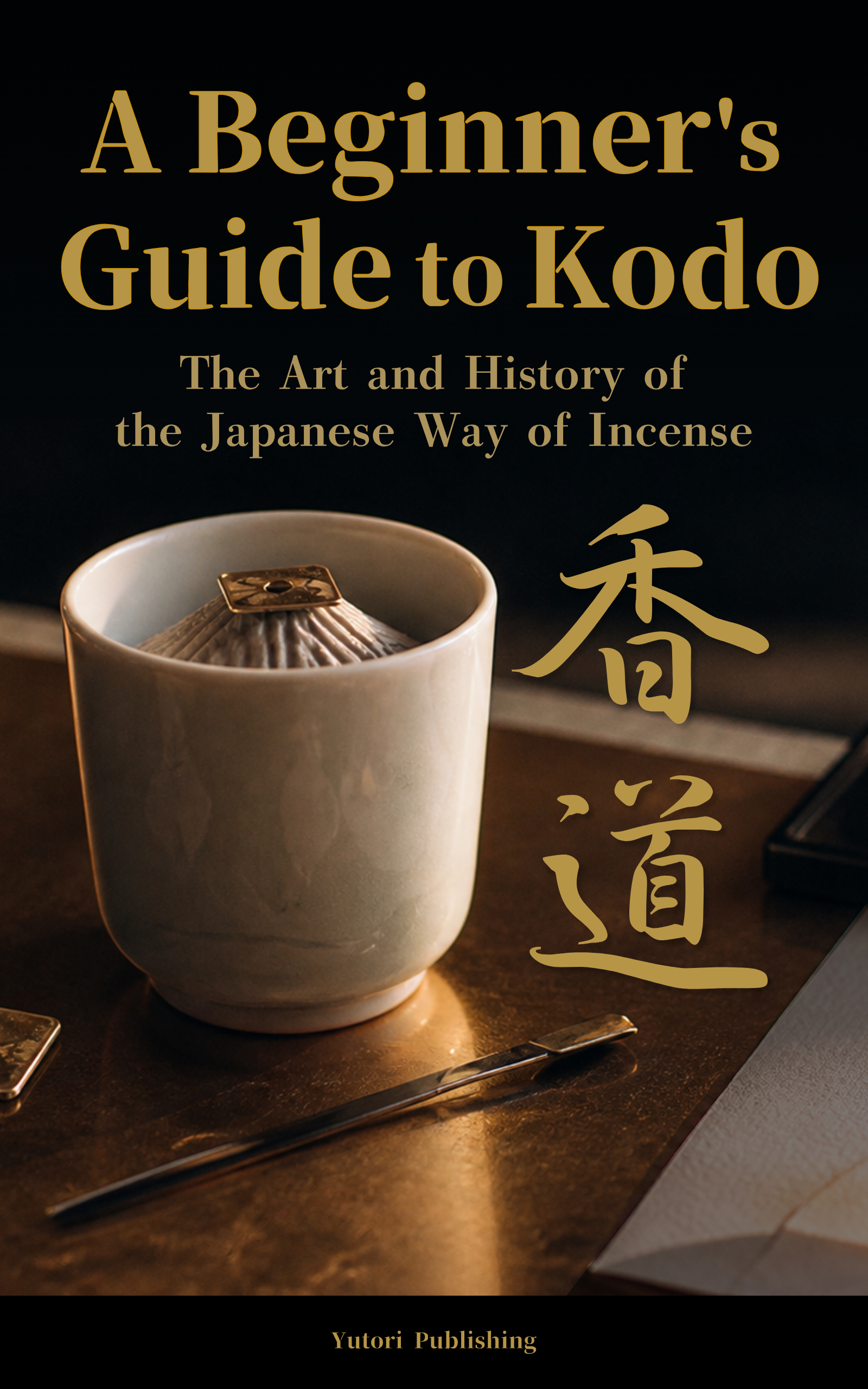
The Japanese Arts Collection Book 1
A Beginner's Guide to Kodo
The Art and History of the Japanese Way.

About this book
What if you could listen to incense?
The Japanese Arts Collection Book 1
Overview
In Japan, that is exactly what practitioners of kodo do. Rather than simply smelling an aromatic wood, they quiet the mind, hold a small ceramic burner in the palm of one hand, and slowly breathe in the fragrance — the way you might listen to a piece of music. This practice, kodo, is one of Japan's oldest and most refined traditional arts, and it has been quietly shaping Japanese culture for over a thousand years.
A Beginner's Guide to Kodo is a clear, accessible introduction to the world of Japanese incense appreciation — written for curious readers who want to understand the art, its history, and the experience it offers, with no prior knowledge required.
What you will discover
- The history of kodo — from a piece of driftwood that washed ashore on Awaji Island in 595 CE, through the elegant courts of the Heian aristocracy, the austere world of the samurai, and the spread of incense culture to ordinary people in the Edo period
- The aromatic woods at the heart of kodo — including agarwood (also known as oud), sandalwood, and the rare classification system called Rikkoku Gomi (Six Countries, Five Tastes) used to identify and describe each fragrance
- The tools of the art — the monkoro incense burner, the mica plate that gently warms the wood without burning it, and the beautifully crafted implements refined over centuries
- The two great schools — the Oie-ryu, rooted in the elegance of the imperial court, and the Shino-ryu, shaped by the discipline of the samurai — and how their different philosophies are visible even in the tools they choose
- Etiquette and practice — how a kodo gathering unfolds, the proper way to hold and pass the burner, and everything a first-time participant needs to know
- Famous kumi-ko games — including Genji-ko, the celebrated incense game based on The Tale of Genji, whose elegant diagrams have become one of Japan's most iconic decorative motifs
A quiet art for the senses
Kodo shares the same quiet spirit as the Japanese tea ceremony and flower arrangement, but it speaks directly to the sense of smell — a sense that is deeply personal and often overlooked. In a world full of noise and distraction, kodo offers something rare: a practice built entirely around stillness, presence, and the fleeting beauty of a fragrance that can never be exactly reproduced.
Who this guide is for
Whether you are drawn to Japanese culture, traditional arts, the world of agarwood and fine fragrance, or simply looking for a calm and thoughtful read, this guide offers a genuine and respectful introduction to one of Japan's most quietly extraordinary arts.
Begin listening.
FAQ
Questions about kodo
What is kodo?
Kodo is the Japanese art of appreciating incense. Rather than simply smelling an aromatic wood, practitioners "listen" to it — quieting the mind and breathing in the fragrance with full attention. It is counted among Japan's classical refined arts, alongside the tea ceremony and flower arrangement.
Do I need any prior knowledge to read this book?
No. A Beginner's Guide to Kodo is written for curious readers with no background in Japanese incense or traditional arts. It explains the history, woods, tools, schools, and etiquette in a clear and accessible way.
What topics does the book cover?
The book covers the history of kodo, the aromatic woods at its heart (including agarwood and sandalwood), the Rikkoku Gomi classification system, the tools of the art, the two great schools (Oie-ryu and Shino-ryu), etiquette and practice, and famous kumi-ko games such as Genji-ko.