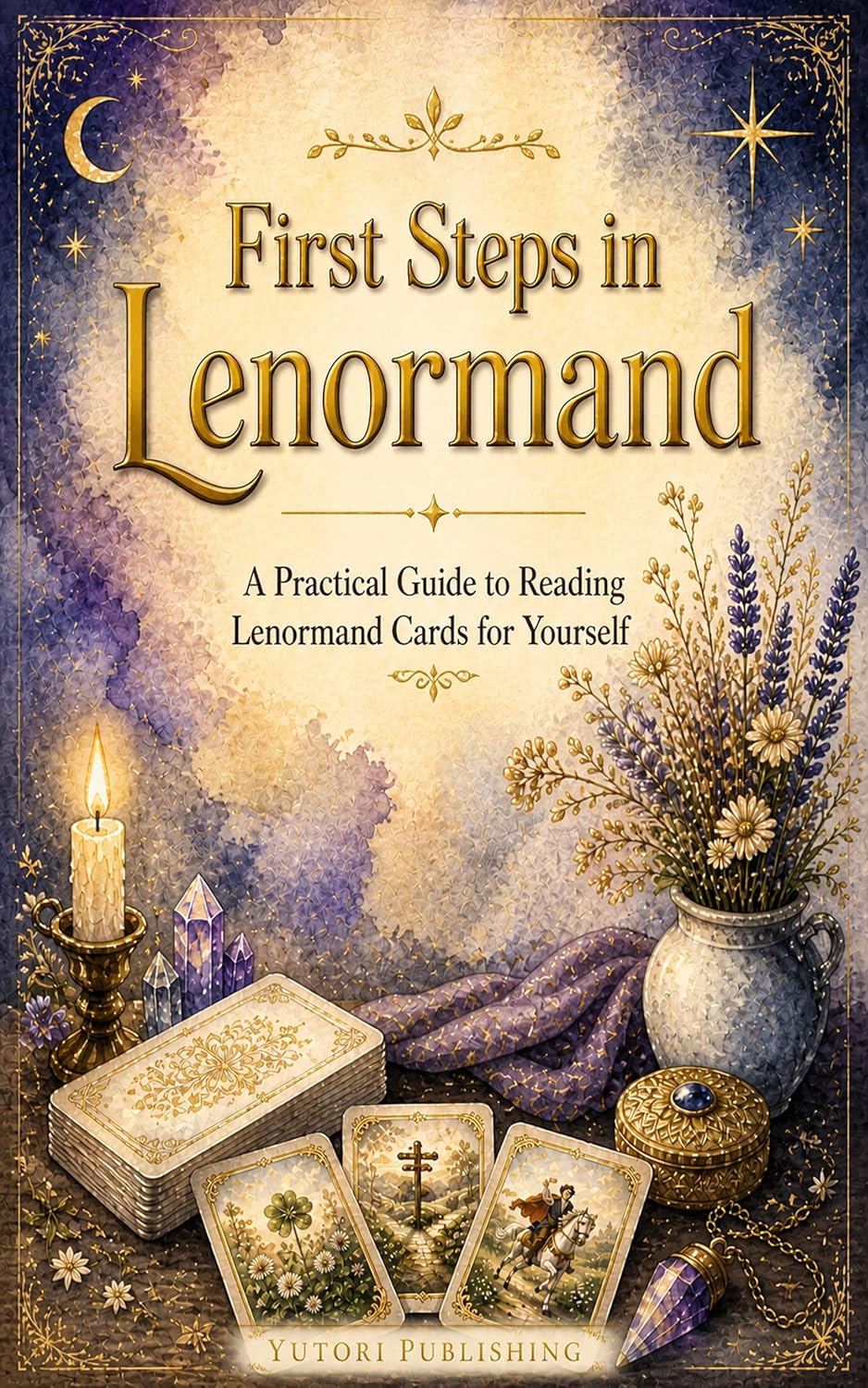
The Grimoire Collection Book 1
First Steps in Lenormand
A Practical Guide to Reading Lenormand Cards for Yourself.

About this book
Begin your journey with Lenormand cards, one clear step at a time.
Overview
First Steps in Lenormand is a practical beginner's guide for anyone who wants to understand Lenormand cards and start reading them with confidence. It explains the cards in a gentle, easy-to-follow way for readers who are new to card reading or divination.
Series
First Steps in Lenormand is The Grimoire Collection Book 1. Readers who want to move deeper into the full 36-card spread can continue with The Lenormand Grand Tableau, Book 2 in the series.
Who this guide is for
This book is ideal for beginners who want a clear introduction to Lenormand symbols, practical card meanings, and simple reading methods they can use for everyday questions, relationships, choices, and future possibilities.
What makes Lenormand approachable
Lenormand cards are known for simple symbols and direct messages. A ship, a key, a heart, a letter, or a garden can offer a clear image that helps readers reflect on real situations without needing an overly complicated system.
What you will find inside
- The basic meaning of each of the 36 Lenormand cards
- Helpful keywords and reading points for every card
- How to prepare your space and mindset before a reading
- How to choose and use a key card
- How to shuffle, draw, and lay out the cards
- Simple spreads, including one-card, two-card, three-card, five-card, and nine-card readings
- The basics of the Grand Tableau
- How to read the cards for yourself in a practical and meaningful way
FAQ
Lenormand card reading questions
Is this book suitable for complete beginners?
Yes. The book is written for readers who are new to Lenormand, card reading, or divination and want a clear practical starting point.
Does the book focus only on prediction?
No. It also shows how Lenormand cards can become a tool for reflection, self-understanding, and everyday guidance.
What kinds of spreads are introduced?
The book introduces simple one-card, two-card, three-card, five-card, and nine-card readings, along with the basics of the Grand Tableau.